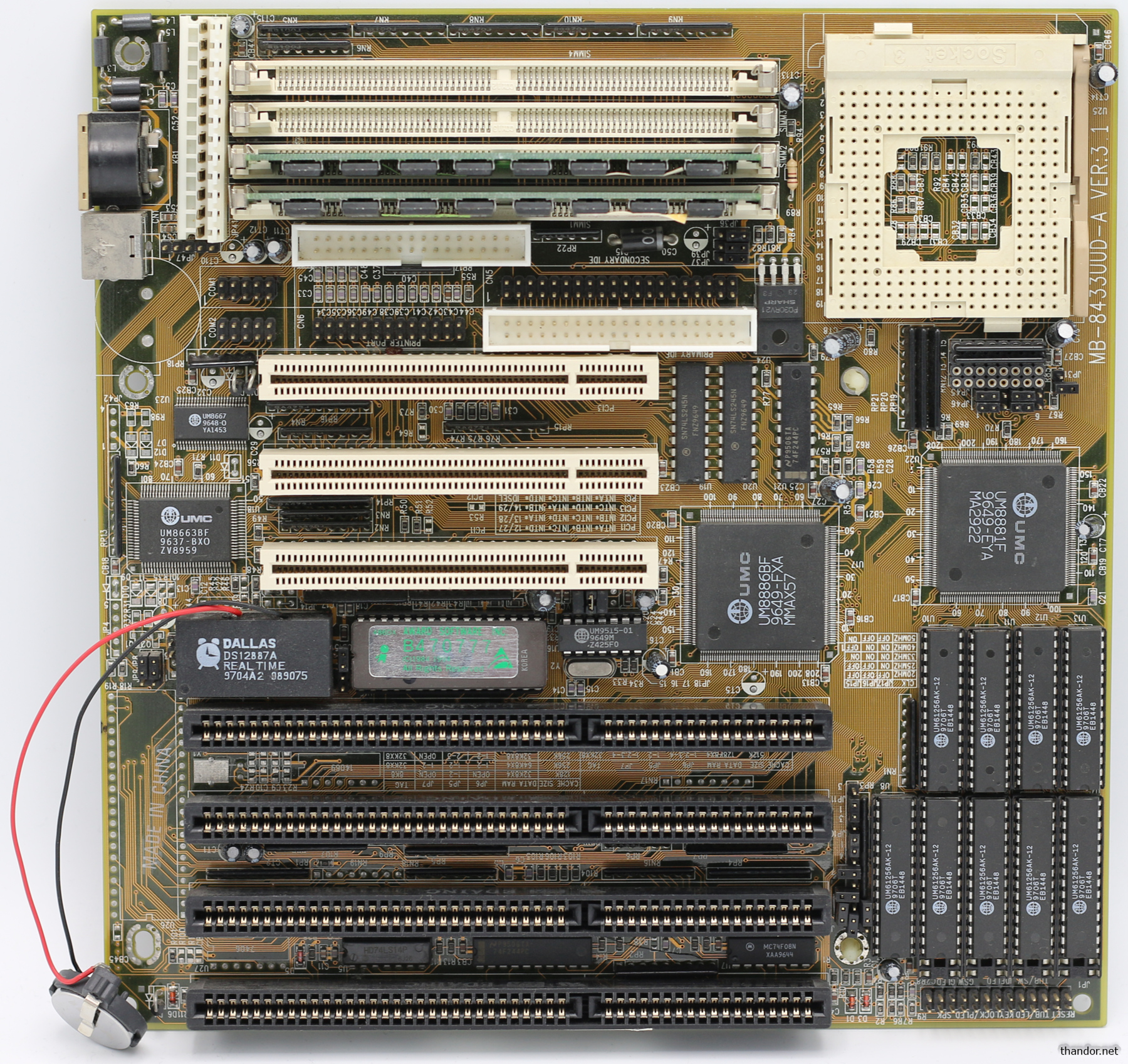
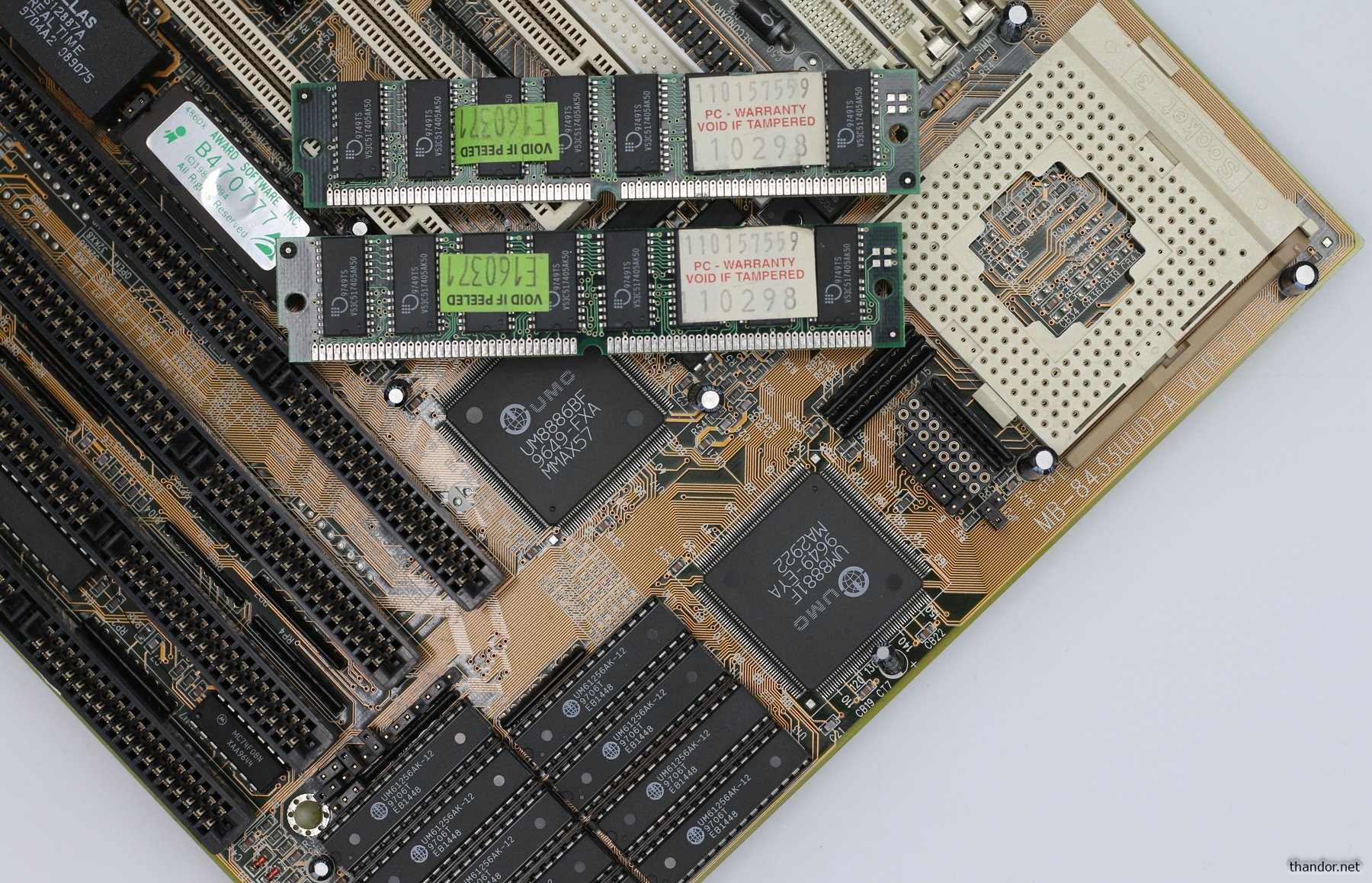
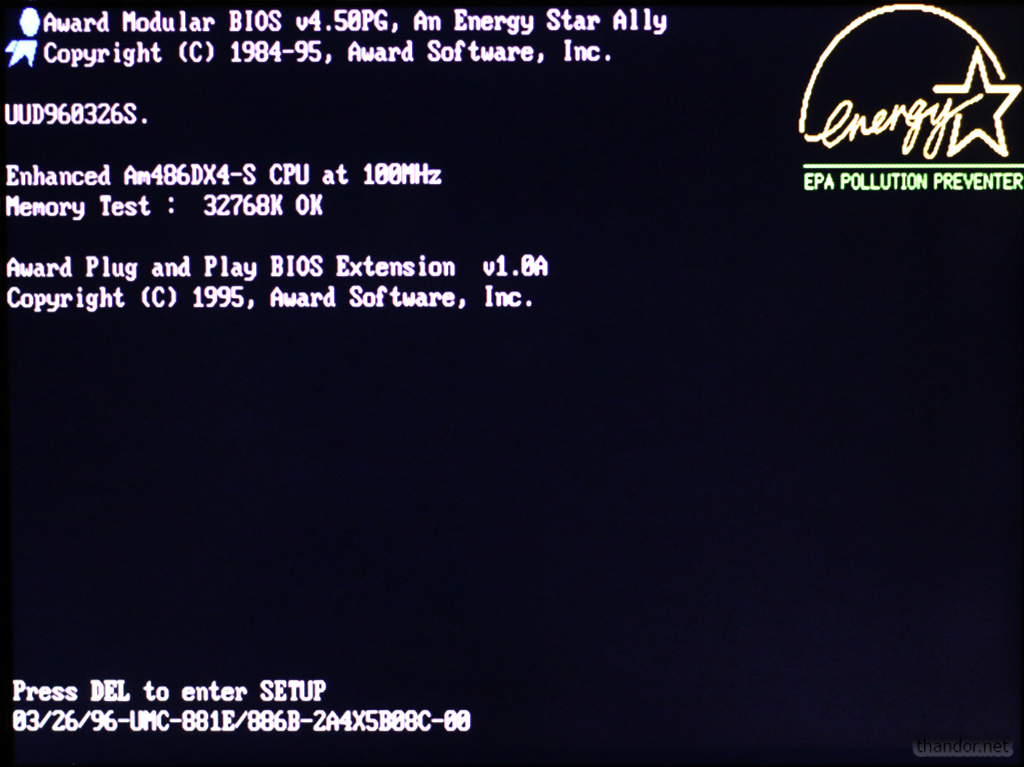
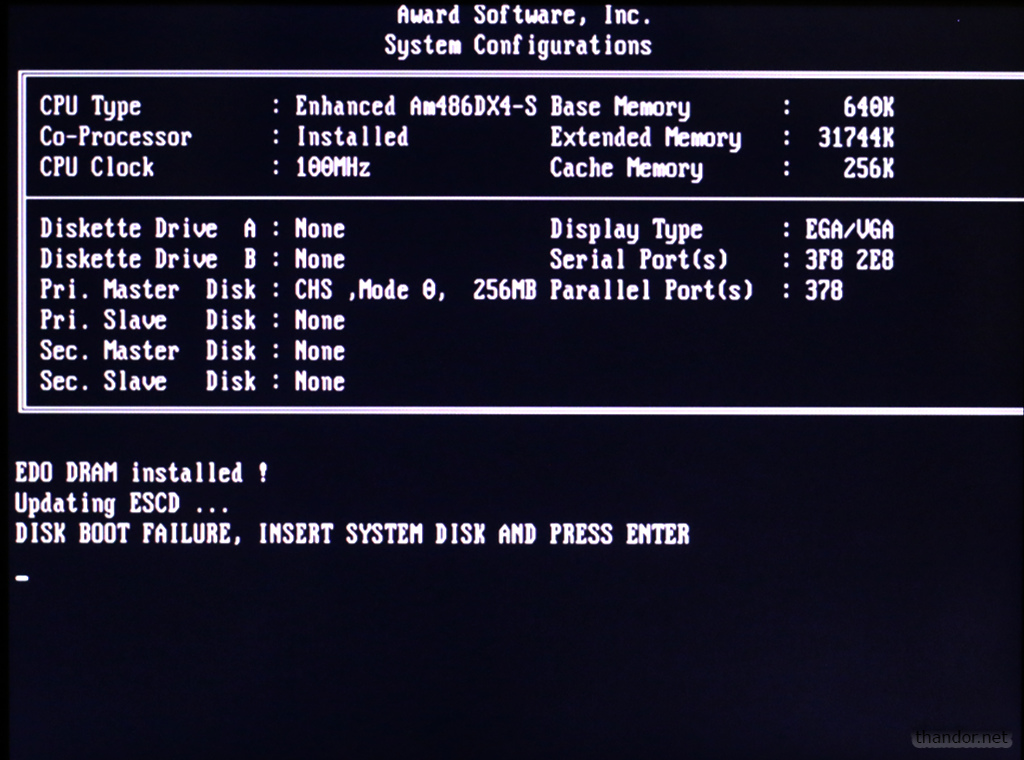
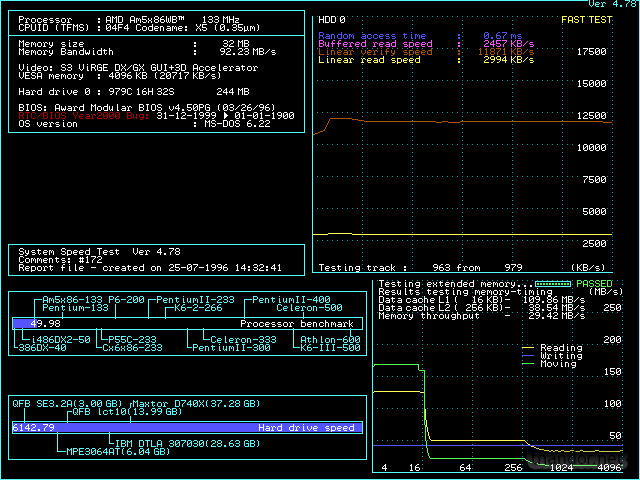
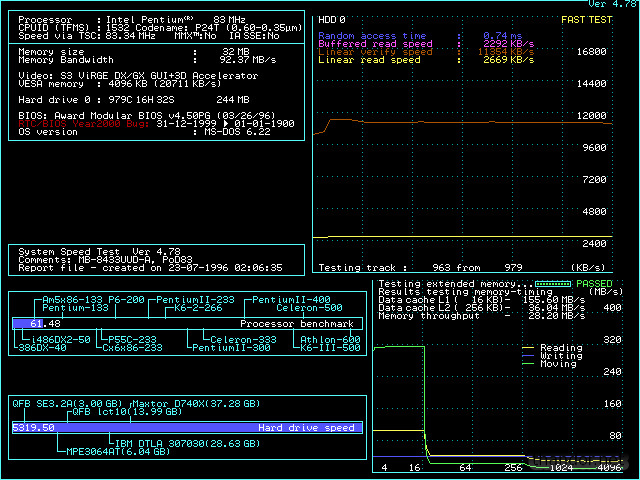
The Biostar MD-8433UUD Rev3.1 is the motherboard I use for 486-class processors. Since it's one of the later 486 motherboards, it features a wide support and has proper dividers to run a 33MHz PCI-bus for the 486DX50. This is essentially a highly integrated "high-end" motherboard designed for budget 486 systems.
The performance of the UMC8881/8886 chipset is very good. I think it's a fair comparison to benchmark the Am5x86 P75 on this platform and a Pentium 75 on an Intel 430VX. However, if you would compare one of the earliest 486 chipsets (from 1989, 1990) you might find that my 486DX scores are higher. Especially in Doom since I'm using a
PCI Hercules Terminator 3D/DX 4MB (S3 Virge DX / 86c375) videocard.
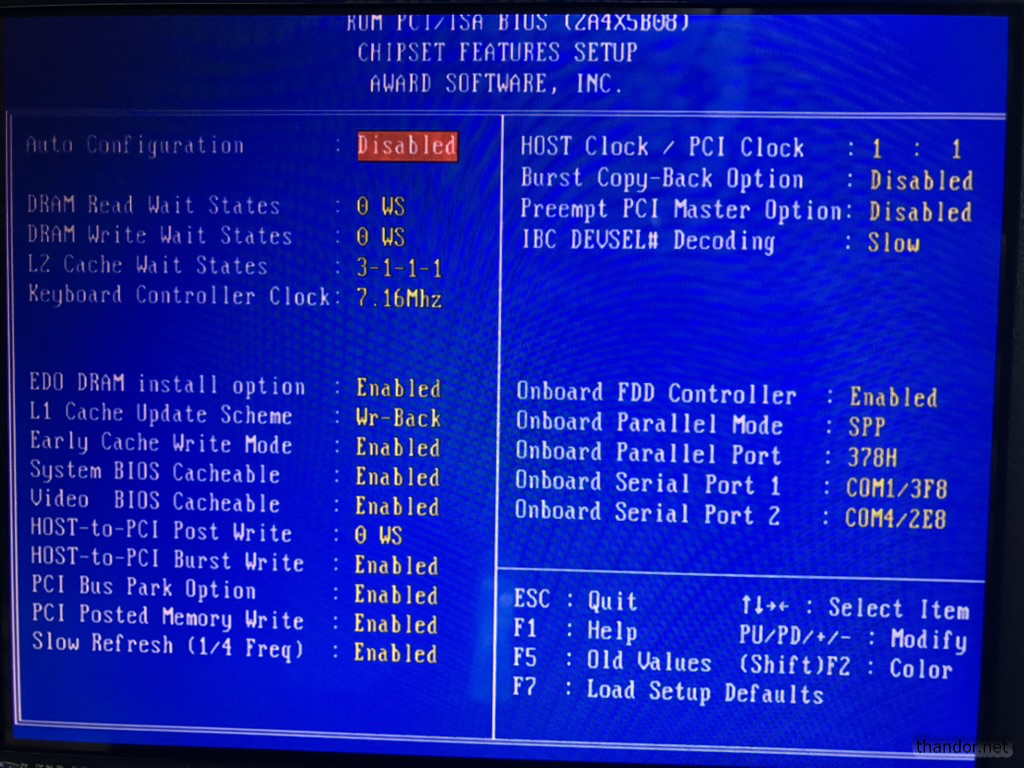
The BIOS settings I used for the benchmarks are default except for:
DRAM Read Wait States: 0WS
DRAM Write Wait States: 0WS
L2 Cache Wait States: 3-1-1-1
EDO DRAM Install option: Enabled
L1 Cache Update Scheme: Wr-Back
Early Cache Write Mode: Enabled
Host clock is usually 1:1 so the PCI-bus runs synchronous with a 20, 25, 33 and 40MHz front side bus. For 50MHz front side bus I have set the divider to 1 : 2/3 to set the PCI bus to 33MHz. Keep in mind that not all PCI cards run at 40MHz (and especially 50MHz) but with a S3 Virge based card you can usually get up to 40MHz.
The Biostar MB-8433UUD is well documented by feipoa. You can read an extensive document
here that covers all the quirks, mods and possibilities. You can stretch a 486 very far using this motherboard.
I have modded the Dallas 12887A real time clock chip to accept a CR2032 battery. The Dallas chips have an internal battery that doesn't recharge. Once depleted it won't be possible to use the MB-8433-UUD-A because it will halt during the POST because it forgets its BIOS settings.
| Motherboard |
Biostar MB-8433UUD-A |
| Chipset |
UM8881F PCI |
| BIOS |
UUD960326S |
| RAM |
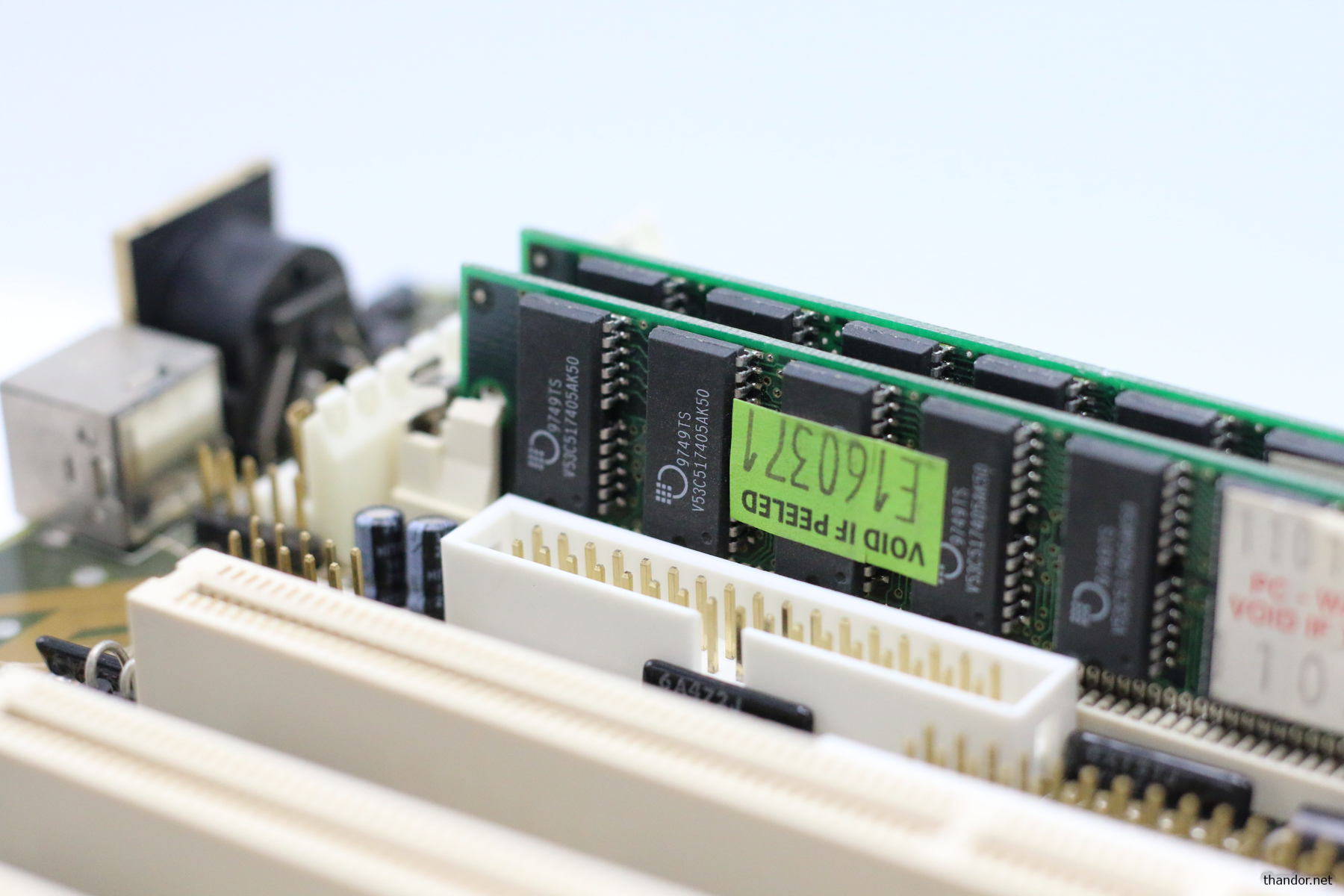
2x16MB EDO 50NS |
| Drive |
256MB CF-card |
| OS |
DOS6.22 |
| Drivers |
None. MS-DOS 6.22 in safe-mode. |
| Additional info |
256KB L2-cache. |