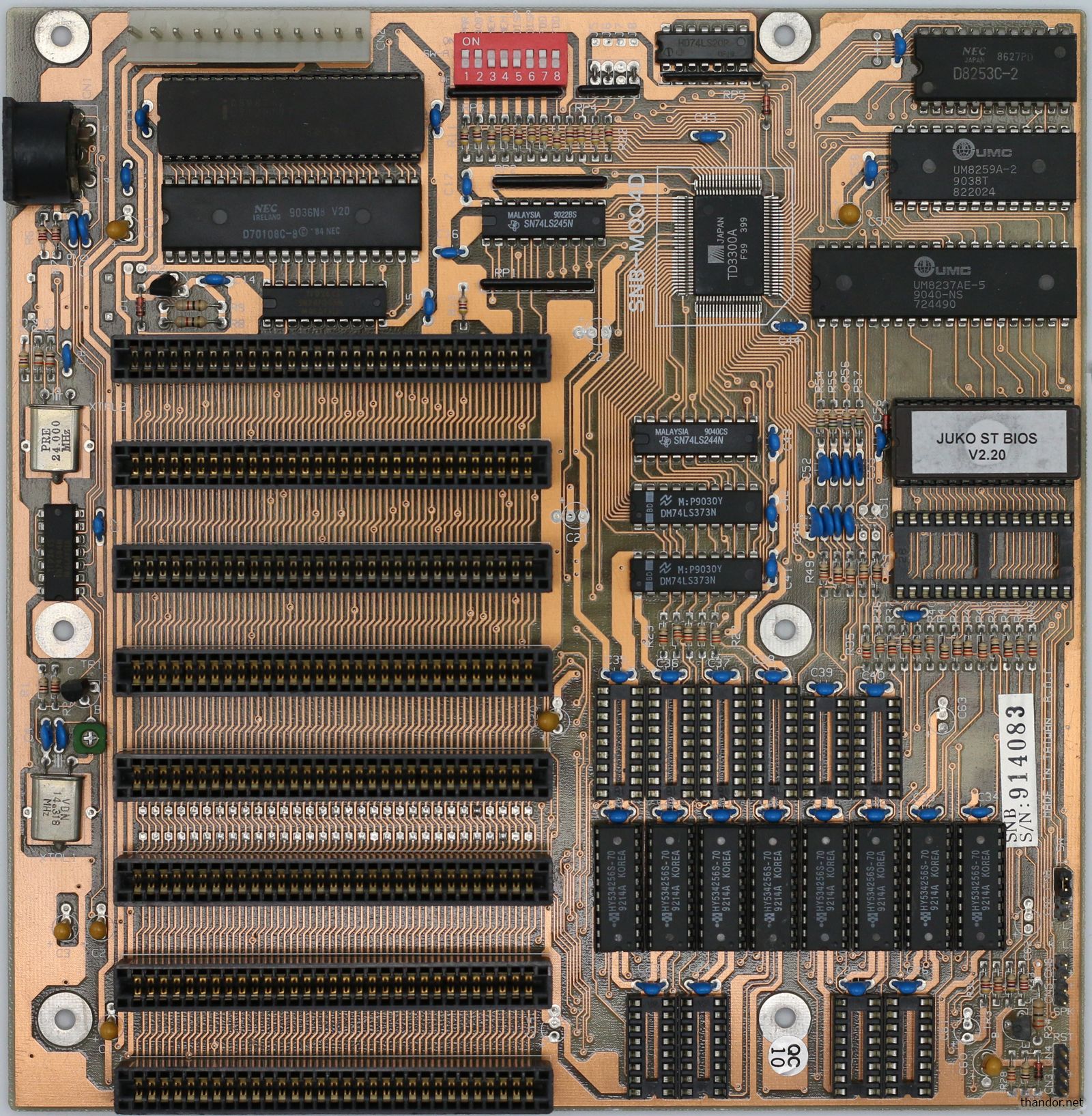
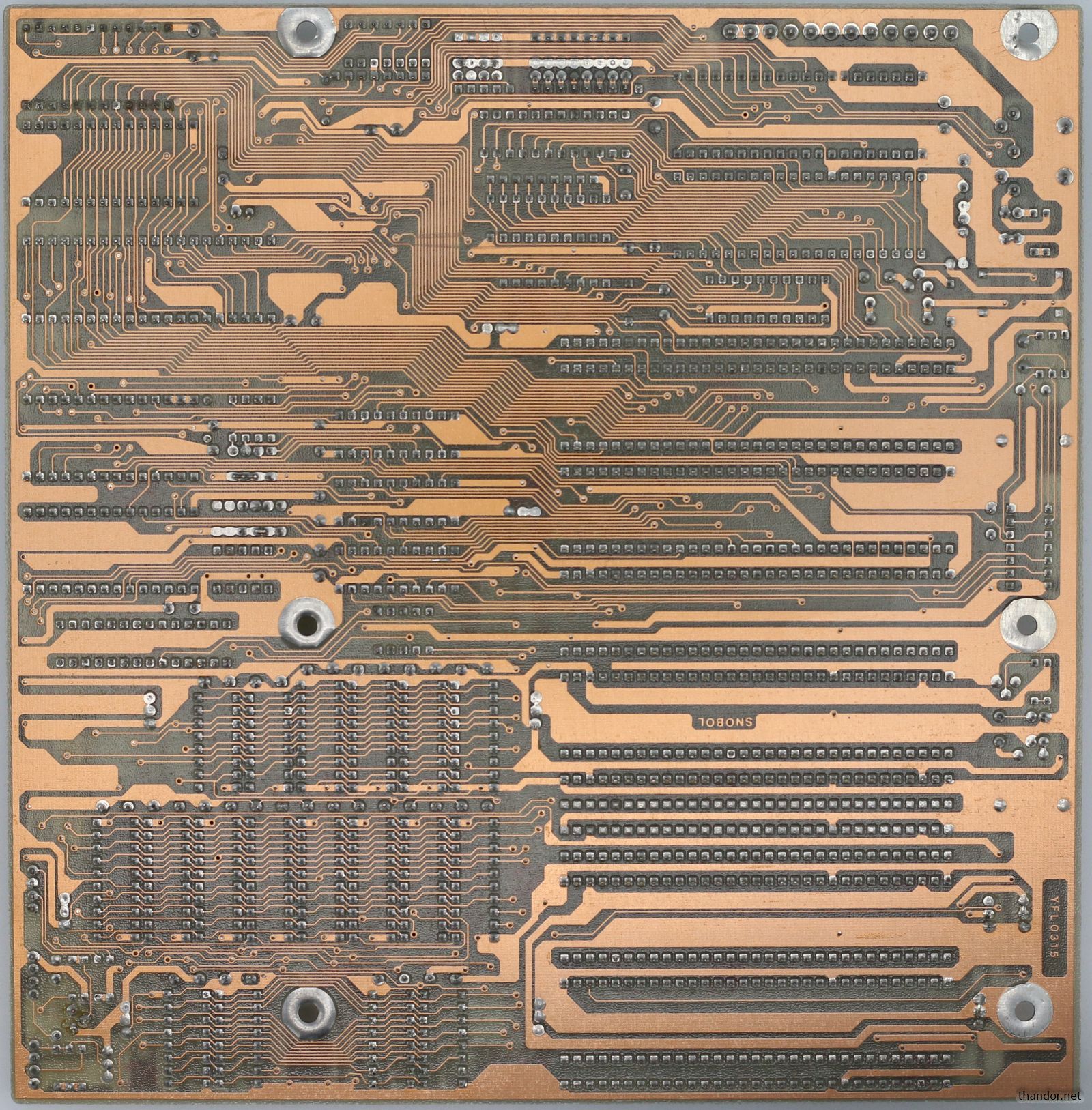
The Juko TurboXT is a compact relatively modern XT-clone. I would put it in the timeframe of Q3 1990 which is quite late for a XT-class machine. In my area a 286 would be considered 'value' and a 386DX high-end. Also remember that the 486 was available in 1989 but that would be out of reach for most people.
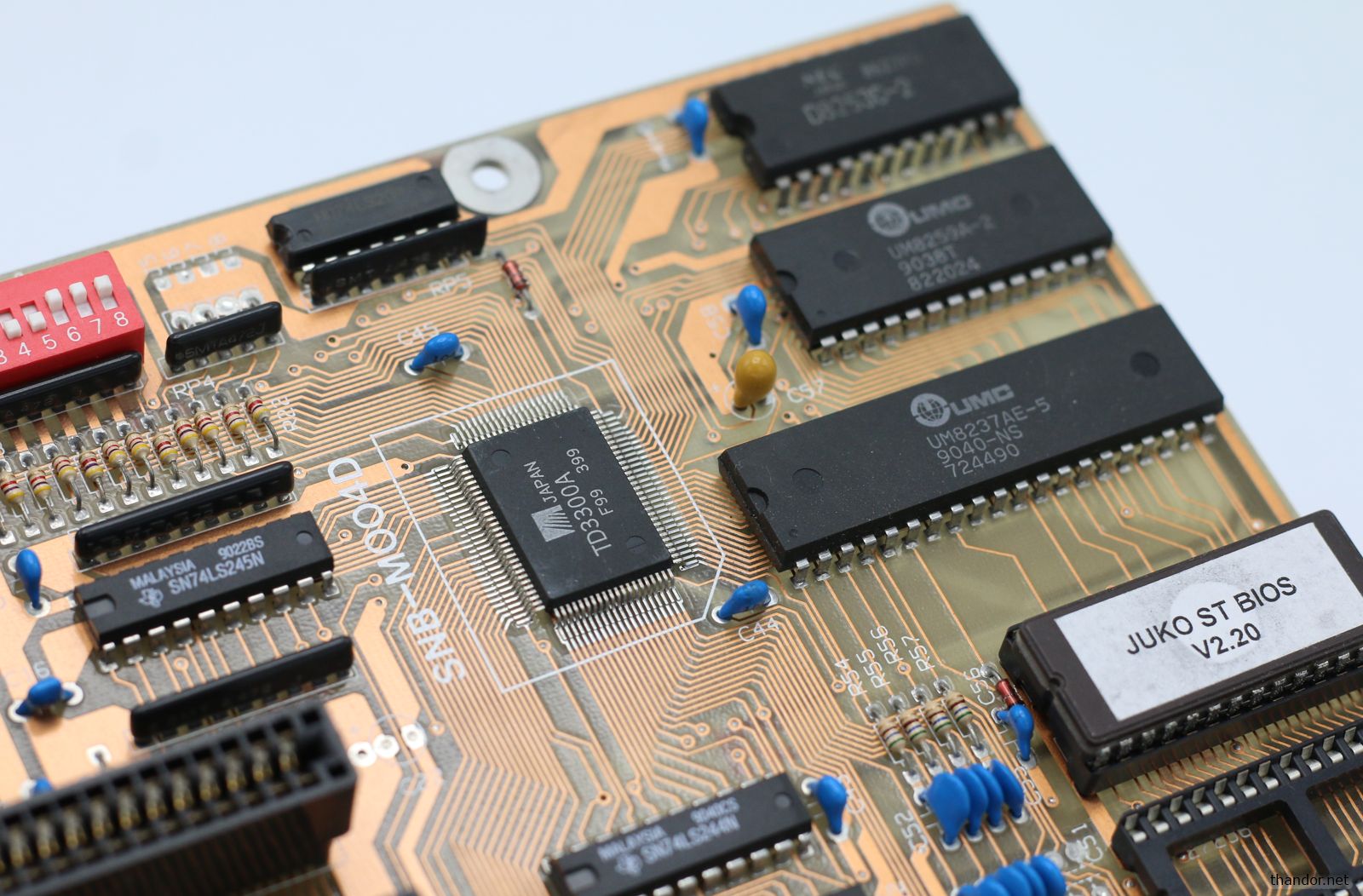
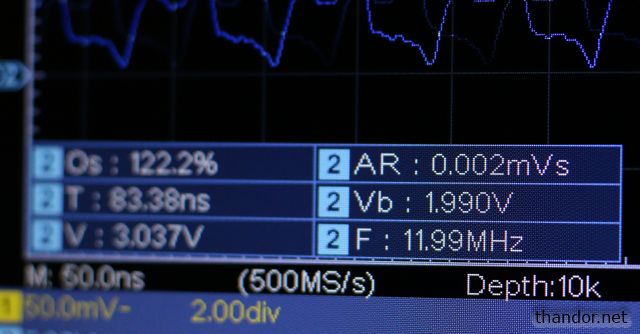
At its base a Tamarack TD3300A chipset is used that is said to be able to achieve an impressive 15MHz clock frequency with 0 wait-state. My board runs at 12MHz, however. Interesting is that the NEC V20 is rated at 8MHz so technically it is factory overclocked. I used an oscilloscope to verify the clock-frequency. During the POST the clock falls back to 4.77MHz a couple of times but while using the system it runs at 11.99MHz.
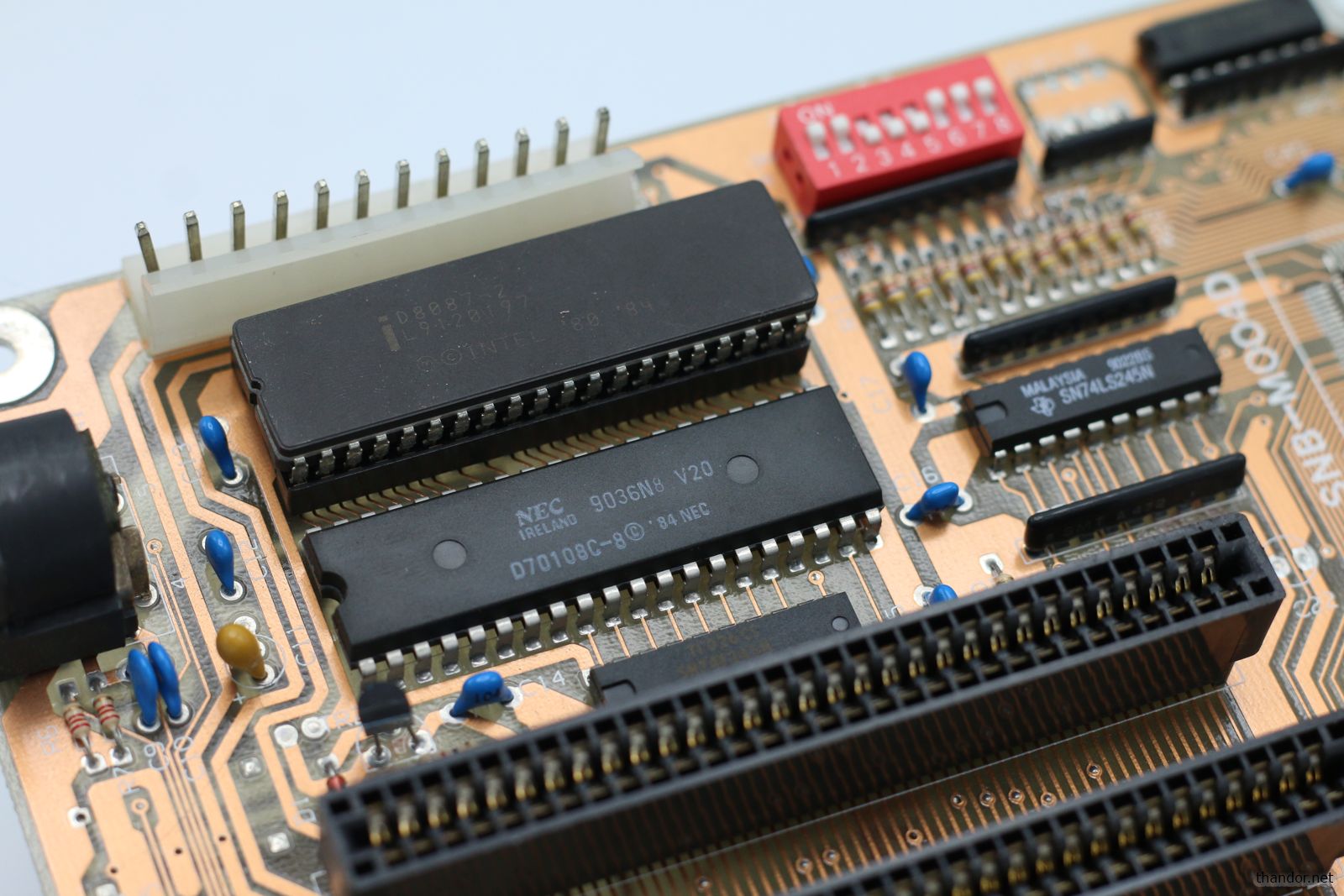
Using an 8087 at 12MHz proves to be difficult. I have one that does work but not it's not stable when the heat sets in.
Regular XT-class systems are either 4.77MHz or double that and often use a true 8088 CPU. The NEC V20 is a drop-in replacement CPU that runs ever so slightly (but noticeable) faster. Add the increased clock-frequency in the mix and TurboXT is its name worthy.
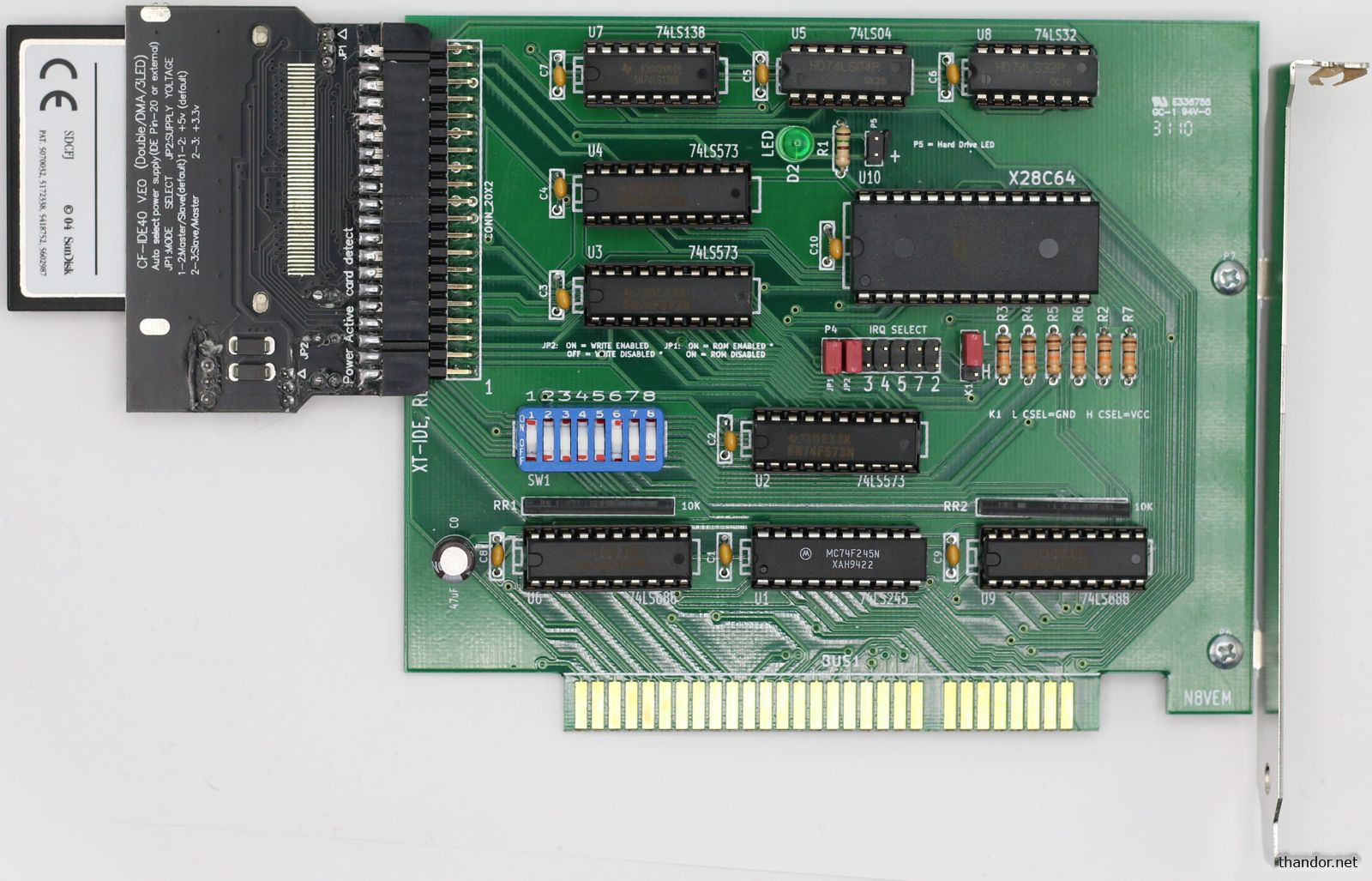
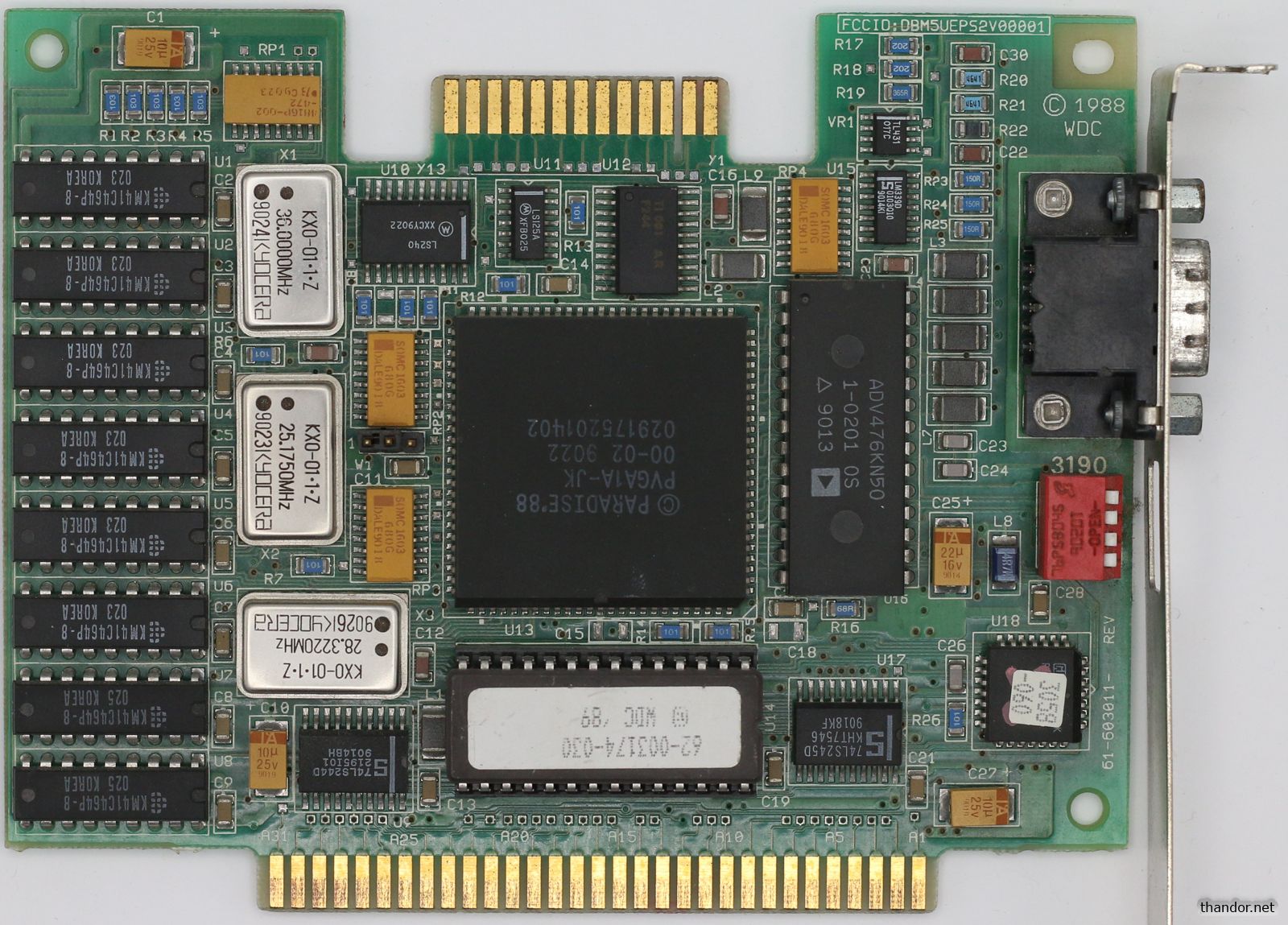
Benchmarks are run off a CF-card controlled by an XT-IDE card. For video output I used a
Paradise PVGA1A JK videocard.
| Motherboard |
Juko TurboXT |
| Chipset |
TD3300A (12MHz) |
| BIOS |
V2.20 |
| RAM |
1MB |
| Drive |
XT-IDE with 256MB CF-card. |
| OS |
DOS 6.22 |
| Drivers |
N/A |
| Additional info |
12MHz version. |